
Business
How IT Companies Can Utilize Telegram Bots for Automated Customer Service


Introduction to Telegram Bots for Customer Service
In the rapidly evolving landscape of customer service, Telegram bots have emerged as a powerful tool for IT companies seeking efficient and automated interactions.
These bots, embedded within the popular messaging platform Telegram, offer a seamless way to engage with customers, address queries, and streamline support processes.
This introduction explores the transformative role of Telegram bots, delving into their benefits, versatility, and the potential for enhancing customer satisfaction.
As businesses increasingly prioritize automation, understanding how Telegram bots can revolutionize customer service becomes essential for IT professionals aiming to provide prompt, personalized, and effective support in an ever-connected digital world.
Benefits of Using Telegram Bots for Customer Support
Leveraging Telegram bots for customer support presents a myriad of benefits for software companies.
Firstly, these bots offer instant responses, ensuring round-the-clock availability and prompt query resolution. Automation reduces response times, enhancing overall efficiency and customer satisfaction.
Cost-effectiveness is another key advantage, as Telegram bots streamline repetitive tasks, allowing human agents to focus on complex issues.
The bots also facilitate personalized interactions, utilizing data to tailor responses to individual customer needs. Furthermore, the seamless integration of Telegram bots with existing systems enhances workflow and data management.
In summary, the adoption of Telegram bots in customer support enables IT companies to deliver agile, cost-efficient, and personalized assistance.
Setting Up a Telegram Bot for Customer Service
Setting up a Telegram bot for customer service is a straightforward yet crucial process for IT companies aiming to streamline interactions. Begin by creating a Telegram bot through the BotFather, Telegram’s official bot creation tool.
Obtain a unique API token and integrate it with your chosen development environment. Define the bot’s capabilities, configuring it to understand and respond to customer queries.
Establish secure connections with your company’s databases and systems to ensure accurate information retrieval. Lastly, test the bot thoroughly to validate its functionality and address any potential issues.
This meticulous setup lays the foundation for an efficient and reliable customer service experience on the Telegram platform.
Designing Conversational Flows for Telegram Bots
Designing effective conversational flows for Telegram bots is pivotal for seamless customer interactions in IT.
Start by identifying common user queries and crafting intuitive responses. Develop a logical flow that guides users toward solutions, incorporating decision trees and conditional statements.
Prioritize clarity and simplicity in language to ensure user comprehension. Integrate interactive elements such as buttons and quick replies to facilitate user engagement.
Implement error handling mechanisms for misunderstandings and ambiguous queries. Regularly update and refine conversational flows based on user feedback and evolving customer needs.
Thoughtful design ensures that Telegram bots deliver a user-friendly and efficient customer service experience, enhancing overall satisfaction.
Implementing Natural Language Processing (NLP) in Telegram Bots
Implementing Natural Language Processing (NLP) in Telegram bots revolutionizes user interactions for IT companies. NLP enables bots to comprehend and respond to user queries with human-like understanding.
Integrate NLP libraries or utilize pre-trained models to extract meaning from messages, allowing for sophisticated and context-aware responses.
Enhance the bot’s ability to recognize intent, sentiment, and entities within user input. Fine-tune the system to adapt to industry-specific language and technical terms.
NLP empowers Telegram bots to provide personalized and accurate assistance, elevating the customer service experience by bridging the gap between user input and intelligent, contextually relevant responses in the dynamic realm of IT support.
Personalization and Customization Features in Telegram Bots
Personalization and customization features in Telegram bots amplify the customer service experience for IT companies.
By tailoring responses based on user preferences, history, and behavior, these features create a sense of individualized engagement.
Implement user profiling to capture relevant data, enabling bots to offer contextually rich suggestions and solutions. Utilize dynamic content delivery, such as personalized greetings and recommendations, enhancing user satisfaction.
However, striking a balance is crucial to respect user privacy and data security. When deployed effectively, personalized interactions through Telegram bots foster a deeper connection, making customer support more efficient, enjoyable, and aligned with the unique needs of each user.
Handling Complex Queries with Telegram Bots
Handling complex queries with Telegram bots is pivotal for IT companies providing advanced customer support.
Design the bot’s conversational flow to recognize intricate technical inquiries and guide users effectively. Implement logical branching and conditional responses to address diverse scenarios.
Integrate the bot with a knowledge base or backend systems to retrieve accurate and detailed information. Clearly communicate the bot’s limitations, and seamlessly transition to human agents when necessary.
Empower the bot with contextual awareness to decipher multifaceted questions. Regularly update the bot’s knowledge base to stay abreast of technological advancements.
Skillful handling of complex queries ensures that Telegram bots contribute to resolving sophisticated technical issues competently.
Integrating Telegram Bots with CRM Systems
Integrating Telegram bots with CRM systems is a strategic move for IT companies seeking streamlined customer interactions.
This integration ensures seamless communication between the bot and the CRM, allowing for real-time updates, lead tracking, and personalized interactions.
By synchronizing customer data, IT companies gain a holistic view of user interactions across platforms. This synergy enhances customer relationship management, enabling swift issue resolution and personalized engagement.
Choose a CRM system compatible with Telegram bot integration, configuring it to capture and utilize relevant customer information.
The result is an efficient, data-driven approach that optimizes customer support and contributes to overall business growth.
Measuring Performance and Optimizing Telegram Bots
Measuring performance and optimizing Telegram bots are essential steps for IT companies committed to delivering top-notch customer service.
Begin by defining key performance indicators (KPIs) such as response time, user satisfaction, and issue resolution rates. Regularly analyze these metrics to gauge the bot’s effectiveness.
Leverage user feedback to identify areas for improvement, ensuring continuous optimization. Implement A/B testing to refine conversational flows and assess the impact of updates.
Periodically review and update the bot’s knowledge base to stay current with industry trends.
This iterative approach to performance measurement and optimization ensures that Telegram bots remain agile, efficient, and aligned with evolving customer needs in the dynamic IT landscape.
Future Trends and Innovations in Telegram Bots for Customer Service
The future of Telegram bots for customer service holds exciting possibilities within the IT landscape.
Anticipate a surge in AI-driven chatbots, incorporating machine learning for more intelligent and context-aware responses.
Voice recognition technology will likely become prevalent, enabling users to interact seamlessly through spoken commands.
Expect advancements in omnichannel support, providing a unified experience across various platforms.
Integration with augmented reality may emerge, allowing for enhanced visual assistance. As the technology evolves, IT companies leveraging Telegram bots should stay attuned to these trends, embracing innovations that promise to elevate the efficiency, personalization, and overall effectiveness of customer service interactions.
Conclusion
IT companies can leverage Telegram bots for automated customer service to enhance efficiency. These bots offer instant responses, streamline query resolution, and reduce costs.
By integrating natural language processing, personalization features, and CRM systems, companies can provide personalized, intelligent, and seamless support, ensuring a satisfying customer experience in the dynamic realm of IT services.

When the Process Creates the Experience
Selling high-value jewelry is often perceived as a single decision—an agreement reached at a specific moment. In reality, the experience is shaped by the process that leads to that decision. Every step, from initial inquiry to final agreement, contributes to how the outcome is perceived.
When the process feels rushed or unclear, even a reasonable outcome can leave individuals feeling uncertain. By contrast, when the process is calm, structured, and transparent, it creates confidence. The same decision, approached differently, can feel entirely different.
This is why process design matters.
The Difference Between Fast and Rushed
Speed and urgency are often confused. A fast process can still be clear and well-structured. A rushed process, however, sacrifices clarity for immediacy.
In a rushed environment, information may be incomplete, explanations may be brief, and decisions may be pushed forward before they are fully understood. This creates friction—subtle tension that makes the process feel unstable.
A calm process removes this friction. It allows each step to be understood before moving to the next, creating a sense of continuity and control.
Why Clarity Requires Time
Clarity does not happen instantly. It develops through explanation, reflection, and understanding. Each stage of the process contributes to building a complete picture.
For example, understanding how a diamond is evaluated requires more than a single statement. It involves seeing how different factors interact, how they influence value, and how they relate to the broader market.
Without time for this understanding to develop, the process remains incomplete. Decisions made in this state may feel uncertain, even if they are technically sound.
Designing a Process That Supports Decisions
A well-designed process anticipates the needs of the individual. It provides information at the right time, in the right sequence, and in a way that is easy to understand.
This design is not accidental. It requires careful consideration of how people think, how they make decisions, and what information they need to feel confident.
In a structured process, each step has a purpose. Evaluation leads to understanding. Understanding leads to reflection. Reflection leads to decisions.
This progression creates clarity.
The Role of Environment in Decision-Making
The environment in which a decision is made has a significant impact on how it feels. A pressured environment can create urgency, even when none is necessary. A calm environment, by contrast, encourages thoughtful consideration.
When individuals engage with a trusted place to evaluate diamonds, the environment itself supports the process. It provides a setting where questions can be asked freely, where information is shared openly, and where decisions are not rushed.
This environment reduces stress. It allows individuals to focus on understanding rather than reacting.
Reducing Friction Through Transparency
Friction in the process often comes from uncertainty. When information is unclear or incomplete, individuals are forced to fill in the gaps themselves. This creates doubt.
Transparency removes this friction. It ensures that all relevant information is visible and explained. It connects each step of the process, making it easier to follow and understand.
When transparency is present, the process feels smoother. It allows individuals to move forward without hesitation.
Why a Calm Process Leads to Better Outcomes
A calm process does not slow things down unnecessarily. It creates the conditions for better decisions. By reducing pressure and increasing clarity, it allows individuals to evaluate their options more effectively.
This leads to outcomes that feel more aligned. Decisions made in a calm environment tend to feel complete, because they are supported by understanding.
In contrast, decisions made under pressure may require revisiting. Even if the outcome is acceptable, the experience may feel unresolved.
Balancing Efficiency and Understanding
Efficiency is important, but it should not come at the expense of understanding. A well-designed process balances both. It provides enough time for clarity while maintaining a sense of direction.
This balance ensures that the process is neither rushed nor unnecessarily prolonged. It moves forward at a pace that supports decision-making.
When this balance is achieved, the process feels natural.
The Impact on Long-Term Satisfaction
The way a decision is made influences how it is remembered. A clear and structured process creates satisfaction, even if the outcome is not perfect. It provides a sense of closure, allowing individuals to move forward without doubt.
A rushed process, however, can leave lingering questions. These questions may not affect the outcome directly, but they influence how the experience is perceived.
Long-term satisfaction, therefore, depends on the process as much as the result.
When the Process Becomes the Standard
In a changing market, expectations continue to evolve. Individuals are no longer satisfied with outcomes alone—they expect a process that supports understanding, transparency, and trust.
A calm and structured approach is becoming the standard, not the exception. It reflects a deeper recognition that value is not just about numbers, but about experience.
Why It Should Never Feel Rushed
In the end, selling high-value jewelry should never feel rushed. It should feel clear, structured, and intentional. Each step should build confidence, guiding individuals toward a decision that feels right.
When the process is designed with care, it creates more than an outcome—it creates understanding.
And it is that understanding, developed through a calm and thoughtful process, that defines a truly successful experience.

The process of buying a home in Thailand has changed dramatically in recent years. What was once a largely offline experience—driven by agents, physical visits, and local networks—has evolved into a digital-first journey.
Today, buyers can explore properties, compare options, and gather insights without leaving their homes. This transformation has been made possible by the rapid growth of digital property platforms, which are reshaping how people search for and evaluate homes.
The Shift From Traditional to Digital
In the past, homebuyers relied heavily on personal connections and on-the-ground exploration. Information was often fragmented, and access to listings depended on local availability.
The introduction of digital platforms changed this dynamic. Buyers gained access to a broader range of properties, along with the ability to compare different options in a more structured way.
This shift has made the property market more accessible and transparent, opening opportunities for both local and international buyers.
Increased Access Brings New Challenges
While digital platforms have improved accessibility, they have also introduced new complexities. The sheer volume of listings can make it difficult for buyers to identify relevant options.
Not all listings provide the same level of detail or accuracy, and inconsistencies in data presentation can create confusion.
As a result, the role of digital platforms has expanded. They are no longer just sources of listings—they are tools for organizing information and supporting decision-making.
The Importance of Structured Information
Structured information is one of the most important elements of modern property platforms. When data is presented consistently, buyers can compare properties more effectively.
Key details such as location, size, price, and condition should be clearly defined and easy to interpret. This reduces cognitive load and allows buyers to focus on evaluating value rather than deciphering information.
Platforms that prioritize structured data provide a more efficient and user-friendly experience.
Enhancing Buyer Confidence Through Transparency
Transparency is another critical factor in digital property platforms. Buyers need to trust that the information they are reviewing reflects reality.
Clear descriptions, realistic images, and complete data all contribute to this trust. When transparency is present, buyers feel more confident in their decisions.
In contrast, unclear or incomplete listings can create hesitation and delay the buying process.
The Role of Technology in Decision-Making
Technology is not only changing how properties are displayed, but also how decisions are made. Advanced search functions, filtering options, and comparison tools allow buyers to refine their search based on specific criteria.
These tools help buyers narrow down options and identify properties that match their needs more quickly.
In addition, digital platforms enable buyers to revisit listings, track changes, and maintain a structured approach to their search.
From Listing Platforms to Decision Platforms
One of the most significant changes in the market is the evolution of property platforms from simple listing directories to decision platforms.
Decision platforms go beyond providing access to properties—they help users understand, compare, and evaluate options.
This includes presenting data in a clear format, offering insights into property value, and supporting the overall decision-making process.
In Thailand’s evolving digital landscape, platforms such as Bangkok Assets demonstrate this transition by focusing on clarity, structure, and user experience rather than simply increasing the number of listings.
The Impact on Buyer Behavior
The rise of digital platforms has influenced how buyers approach property decisions. Buyers are now more informed, more selective, and more strategic.
They rely on data to guide their choices and expect platforms to provide reliable and organized information.
This shift has raised the standard for both property listings and the platforms that host them.
Challenges and Opportunities Ahead
Despite these advancements, digital property platforms still face challenges. Ensuring data accuracy, maintaining consistency, and improving user experience are ongoing priorities.
At the same time, there are significant opportunities for innovation. Platforms that continue to refine how information is presented and used will be better positioned to meet evolving buyer expectations.
Final Thoughts
Digital property platforms have fundamentally changed how people buy homes in Thailand. They have made the market more accessible, improved transparency, and introduced new tools for decision-making.
However, their true value lies not in the number of listings they provide, but in how effectively they support buyers in making informed decisions.
As the market continues to evolve, platforms that prioritize clarity, structure, and trust will play an increasingly important role in shaping the future of real estate in Thailand.
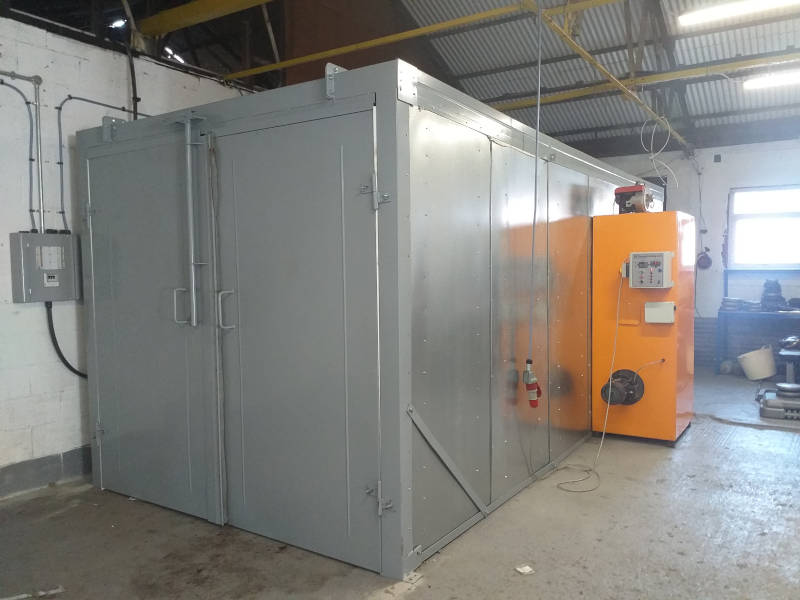
Production shops that handle short runs or specialty parts often need curing equipment that adapts quickly to changing workloads. Batch-style powder curing ovens provide that flexibility without requiring the scale of large automated conveyor systems. Their design allows powder coating operations to maintain professional results while controlling costs and simplifying workflow.
Lower Initial Capital Investment Requirements
A batch-style setup allows smaller manufacturers to enter powder coating without committing to a large automated system. Conveyor lines require complex infrastructure, including extended powder coating ovens, automated part transport, and large air handling equipment. Batch powder curing ovens eliminate many of these components, which lowers the financial barrier for shops beginning powder coating operations. Budget considerations frequently guide the selection of a powder coating equipment package. Batch ovens paired with a spray booth and basic handling tools form a practical starting point for many facilities. Shops searching for powder coating equipment for sale often find that batch systems offer dependable curing performance without the expense of a full conveyor-based powder coating system.
Flexible Curing Cycles for Diverse Part Sizes
Production environments that handle mixed part sizes benefit from flexible curing schedules. Batch powder coating ovens allow operators to adjust temperature profiles and dwell times based on the material thickness and coating type. This flexibility makes it possible to process small brackets, fabricated frames, or large assemblies within the same equipment.
Operators frequently switch between production runs that require different cure settings. A batch-style industrial powder coating oven allows technicians to tailor each cycle without affecting other work in progress. This level of adaptability supports shops that produce custom work or operate in industries where part dimensions vary from job to job.
Reduced Energy Consumption During Idle Periods
Energy efficiency becomes an advantage for facilities that do not operate continuously throughout the day. Conveyor-based powder coating systems often remain heated even when production pauses. Batch powder curing ovens, however, can be powered down or run only when needed.
Lower energy use occurs because these ovens heat a smaller chamber and operate only during active curing cycles. Many facilities evaluating a powder coating oven for sale choose batch equipment specifically to control energy costs. For shops that coat parts intermittently, this operating style keeps powder coating equipment practical and efficient.
Smaller Equipment Footprint for Compact Shops
Floor space often limits what type of powder coating equipment a shop can install. Conveyor systems stretch across long production lines, requiring room for part movement, staging areas, and cooling zones. Batch powder coating ovens occupy far less space while still providing full curing capability.
Compact layouts allow smaller businesses to integrate powder coating equipment into existing work areas. A batch-style industrial powder coating oven can sit alongside fabrication or assembly departments without major building modifications. This smaller footprint allows compact shops to introduce powder coating services without rearranging the entire facility.
Simplified Loading and Unloading Procedures
Batch systems reduce complexity in the way parts move through the curing process. Operators manually place coated components onto racks or carts and roll them into the oven chamber. Once curing finishes, the same racks are removed and prepared for cooling or packaging.
Loading procedures typically follow a straightforward pattern:
- Parts are coated and placed onto rolling racks
- Racks move directly into powder curing ovens
- The oven door closes for the programmed curing cycle
- Finished parts exit for cooling and inspection
Because the process stays simple, batch powder coating equipment requires less training than automated conveyor lines.
Easy Temperature Adjustments Between Batches
Different coatings require different curing temperatures. Polyester powders may cure at one temperature range, while hybrid coatings or specialty finishes require slightly different conditions. Batch powder coating ovens allow operators to change temperature settings quickly between cycles.
Adjustments occur directly at the control panel before the next load enters the oven. Production teams often value this flexibility when handling diverse coating requirements. Powder coating systems designed for batch processing allow quick transitions between jobs without interrupting the overall workflow.
Minimal Maintenance Compared to Conveyor Lines
Large conveyor powder coating systems contain numerous mechanical parts that require ongoing service. Motors, chain drives, conveyor bearings, and transfer systems must operate constantly to keep parts moving. Batch powder coating ovens remove many of these mechanical elements.
Maintenance responsibilities typically focus on airflow fans, burners, and temperature controls. Because fewer moving parts exist, routine maintenance becomes simpler and less time-consuming. Shops operating smaller powder coating equipment benefit from reduced downtime and fewer mechanical repairs.
Ability to Process Multiple Colors Simultaneously
Color changes can slow production in automated systems that rely on shared conveyor lines. Batch operations allow shops to run separate loads with different powder colors at the same time. This approach helps reduce delays associated with cleaning spray booths and reclaim systems.
A facility might operate two powder curing ovens side by side, each curing a different coating color. Independent curing cycles allow shops to process multiple orders simultaneously without waiting for the previous batch to finish. This flexibility helps small operations respond quickly to customer requests.
Cost-Effective Manual Part Handling Integration
Manual handling methods often pair well with batch powder coating equipment. Rolling racks, carts, or simple overhead lifting tools move parts between spray booths and curing ovens without requiring complex automation.
Facilities often appreciate the balance between productivity and affordability that manual handling provides. Many powder coating equipment packages designed for smaller operations include basic transport methods that keep equipment costs manageable while still supporting steady production output. Experienced equipment designers who focus on powder coating systems can help shops select the right configuration for their production scale. Well-designed powder curing ovens and supporting spray equipment allow facilities to maintain coating quality without installing a full conveyor line. Reliant Finishing Systems provides powder coating equipment solutions that help manufacturers build efficient finishing operations suited for low-volume production environments.

How to Choose a Luggage Case That Is Suitable for Travel

What to Consider When Buying Used Transmissions

How Roof Racks Make Family Road Trips More Comfortable

AI + ERP: How Odoo is evolving in the AI-First era | Insights from PowerGate Software

11 Home Repairs That Actually Matter and What to Expect From Each One

Red Rocks Shuttle: A Convenient Red Rocks Ride for Concert Fans

Why Batch-Style Powder Curing Ovens Are Ideal for Low-Volume Production

Why Vertical Water Storage Tanks Are Essential for Reliable Water Supply

What Kind of Specialist Do You Need

The Benefits of Individualized Patient Care for Everyone
-

 All1 week ago
What Every Casino Player Needs to Know About Gambling Taxes in 2026
-
 News1 week ago
11 Home Repairs That Actually Matter and What to Expect From Each One
-
 Tech1 week ago
AI + ERP: How Odoo is evolving in the AI-First era | Insights from PowerGate Software
-
 All1 day ago
What to Consider When Buying Used Transmissions
-
 Life Style1 day ago
How Roof Racks Make Family Road Trips More Comfortable
-
 All1 day ago
How to Choose a Luggage Case That Is Suitable for Travel