
Business
Coworking Spaces: The Unexpected Graveyard of 9-to-5 Careers


In the ever-evolving landscape of modern work, coworking spaces have emerged as pivotal arenas where traditional 9-to-5 careers are being reimagined and, in many cases, phased out. Unlike never before, coworking spaces offer a space for work that’s connected with the outside world. Lunch can become a collaboration. After work drinks can become a new venture. These dynamic environments offer a glimpse into the future of work, one where flexibility, autonomy, and community redefine what it means to have a successful career.
The Shift Away from 9-to-5
The standard 9-to-5 workday, a relic of industrial age efficiency, has been the backbone of the traditional career model for decades. However, the rise of digital technology and the increasing value placed on work-life balance have catalyzed a shift towards more flexible work arrangements. According to a report by FlexJobs, there was a 159% increase in remote work between 2005 and 2017, a trend that has only accelerated in recent years (FlexJobs, 2019).
Coworking Spaces at the Forefront
Coworking spaces have become the physical embodiment of this shift, offering an alternative to the rigid structures of traditional office environments. With amenities ranging from open-plan seating and private offices to communal lounges and high-speed internet, these spaces cater to a diverse community of freelancers, entrepreneurs, and remote workers. The Global Coworking Unconference Conference (GCUC) estimates that the number of coworking members will rise to 5 million by 2024, highlighting the growing appeal of these flexible workspaces (GCUC, 2020).
The Appeal of Flexibility and Autonomy
One of the key attractions of coworking spaces is the autonomy they offer. Members can choose when they work, how they work, and even where within the space they feel most productive. This level of control over one’s work environment is a stark contrast to the fixed schedules and assigned seating of traditional 9-to-5 jobs. A study by the Harvard Business Review found that coworking space members thrive at a higher rate than traditional workers, largely due to the autonomy and flexibility afforded by these spaces (Harvard Business Review, 2015).
Community and Collaboration
Beyond the physical infrastructure, coworking spaces foster a sense of community and collaboration that is often lacking in conventional office settings. The opportunity to network and collaborate with professionals from various industries can lead to new business opportunities, partnerships, and ventures. According to Deskmag’s Global Coworking Survey, 71% of participants reported a boost in creativity, and 62% said their standard of work had improved since joining a coworking space (Deskmag, 2019).
The Downside of the Coworking Utopia
Despite their many benefits, coworking spaces are not without their challenges. The open and communal nature of these spaces can sometimes lead to distractions and a lack of privacy, potentially impacting productivity. Moreover, the very flexibility that makes coworking spaces attractive can also contribute to a lack of routine and structure, which some professionals find essential for productivity.
The Death of 9-to-5 in Coworking Spaces
Coworking spaces symbolize the gradual decline of the traditional 9-to-5 career model. By offering an environment that prioritizes flexibility, autonomy, and community, these spaces cater to a new generation of workers for whom the conventional office and fixed work hours are no longer appealing or necessary. The trend towards coworking spaces reflects a broader shift in societal values, with an increasing emphasis on work-life balance, mental health, and the integration of work with personal life.
An Owner’s Perspective On The Coworking Craze
Ravi Kahan, the founder of Imagine Coworking, offers his perspective on the transition from traditional careers to more flexible work arrangements facilitated by coworking spaces:
“In the heart of Kennesaw, Imagine Coworking is more than just a space; it’s a community where the conventional boundaries of work are redefined. Our members, ranging from freelancers to remote employees of multinational corporations, find value in the autonomy and flexibility that our coworking space in Kennesaw provides. This shift away from the 9-to-5 model is not just about changing where people work; it’s about transforming how they work, emphasizing productivity, well-being, and a sense of community.”
Kahan’s insights highlight the role of coworking spaces in facilitating the transition from traditional career paths to more flexible and autonomous work arrangements.
Navigating the Transition
For those accustomed to the structure of a 9-to-5 job, the transition to coworking spaces and the flexibility they offer can be both liberating and daunting. Successfully navigating this shift requires a reevaluation of one’s work habits, time management skills, and professional goals. It also involves embracing the uncertainty and fluidity that come with freelance or remote work, leveraging the community within coworking spaces for support, networking, and collaboration.
The Future of Work
The trajectory of coworking spaces points towards a future where the concept of a “career” is no longer confined to traditional corporate ladders and fixed office environments. Instead, careers are becoming more fluid, with professionals taking on multiple roles, projects, and gigs that align with their skills, interests, and lifestyle preferences. Coworking spaces provide the infrastructure and community to support this new paradigm, offering a fertile ground for innovation, entrepreneurship, and professional growth.
Conclusion
Coworking spaces represent a significant shift in the professional landscape, challenging the traditional 9-to-5 career model and offering a glimpse into the future of work. These spaces provide a flexible, autonomous, and community-oriented work environment that caters to the evolving needs of today’s workforce. As more professionals seek out work arrangements that prioritize flexibility, work-life balance, and personal well-being, coworking spaces will continue to play a pivotal role in shaping the careers of the future.
The transformation witnessed within the walls of coworking spaces— from the way we work to the way we think about careers—signals a broader cultural shift. This redefinition of work is not just about where we work, but about finding work that is meaningful, fulfilling, and aligned with our values and lifestyles. In this sense, coworking spaces are not just the graveyard of the traditional 9-to-5 career but the birthplace of a new era of work that celebrates autonomy, flexibility, and community.
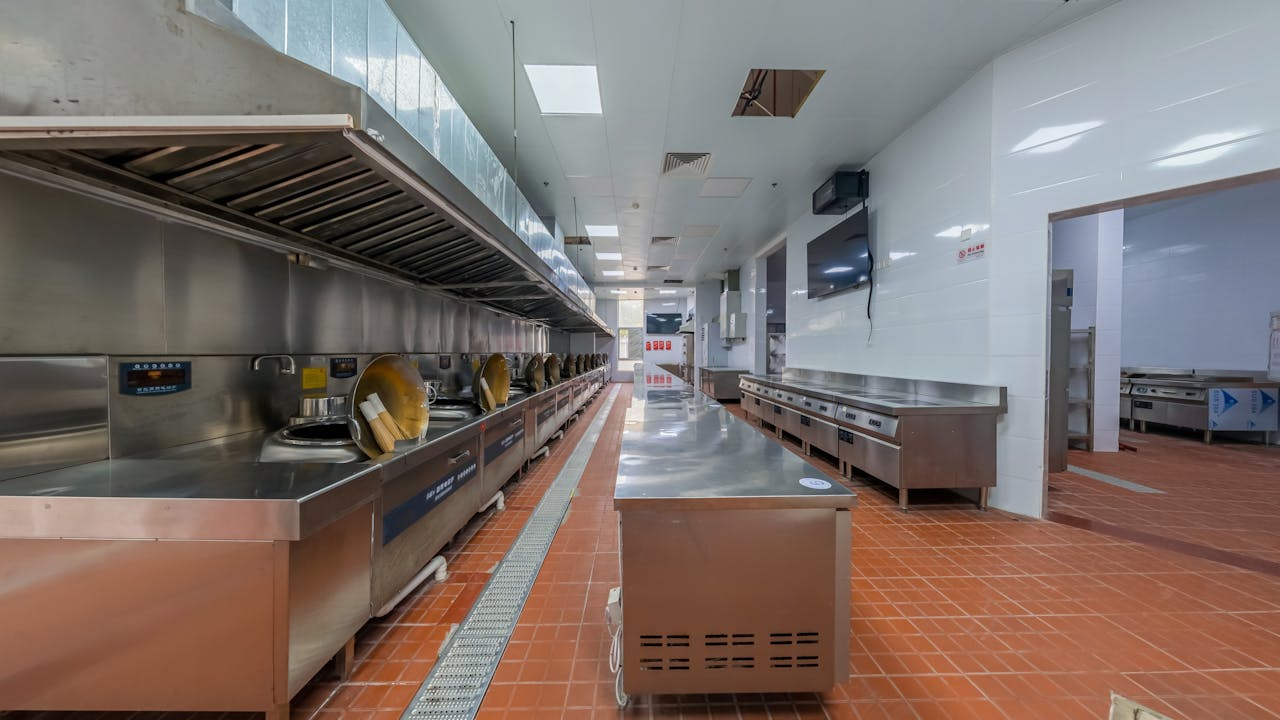
Running a commercial kitchen means staying ahead of problems before they turn into costly disruptions. Equipment breaks down, fasteners loosen, and parts wear out over time, and the kitchens that handle these situations best are the ones that already have what they need on hand.
Knowing which components are worth stocking is not always obvious, especially for those newer to managing or operating a food service environment. This article covers the kinds of parts and hardware that experienced kitchen managers rely on, and why having them readily available makes a real difference in daily operations.
Gaskets and Door Seals
Gaskets and door seals are found throughout a commercial kitchen, particularly on refrigeration units, ovens, and dishwashers. They are responsible for maintaining proper temperatures and preventing energy loss, which makes them one of the more frequently needed replacement parts in any kitchen.
Over time, these seals become brittle, cracked, or compressed, and a worn seal can affect the performance of an entire unit. Keeping a supply of common gasket sizes and materials on hand means that a failing seal does not have to wait days for a replacement to arrive.
Heating Elements and Ignitors
Heating elements and ignitors are critical components in ovens, ranges, fryers, and other heat-producing equipment. When they fail, the affected equipment becomes unusable until a replacement is installed, which can be a serious problem during busy service periods.
These parts are specific to the make and model of the equipment they belong to, so it is worth knowing which ones correspond to the units in your kitchen before a failure actually happens. Having a spare on hand for high-use equipment means that a technician can address the issue quickly without waiting for a parts order.
Refrigeration Case Parts
Refrigeration case parts cover a broad range of components that keep display coolers, reach-in units, and walk-in refrigeration systems functioning properly. This includes items like evaporator fans, drain pans, thermostats, and defrost timers, each of which plays a role in keeping temperatures stable and consistent.
When one of these components fails, the entire unit can lose its ability to maintain safe food storage temperatures, which is both a health and financial concern. Many kitchen supply distributors, such as CaseTrim, and refrigeration equipment specialists carry these parts, and some manufacturers offer direct parts support through their service networks or authorized dealers.
Fuses and Circuit Breakers
Electrical components like fuses and circuit breakers are easy to overlook until the moment they are needed. Commercial kitchen equipment draws significant electrical loads, and fuses in particular can blow without much warning when equipment is cycled on and off repeatedly throughout the day.
Having a basic stock of the correct fuse ratings and types for your equipment means that an electrically capable team member or technician can restore power to a unit without waiting for a parts run. It is worth reviewing your equipment manuals to identify which fuses are used most commonly across your kitchen setup.
Belts and Bearings
Belts and bearings are found in commercial mixers, ventilation systems, conveyor ovens, and other equipment with moving parts. They wear gradually over time and can be easy to miss during routine checks until the point where they start to cause noise, vibration, or outright failure.
Keeping a selection of replacement belts and bearings appropriate for your equipment can prevent a slow degradation from turning into an unexpected breakdown. Equipment manufacturers and commercial kitchen parts suppliers are typically the best sources for these, as the specifications need to match the original components closely.
Locknuts and Fasteners
Locknuts, from websites like AZTECHLOCKNUT.COM, and other specialty fasteners are small components that play a significant role in keeping commercial kitchen equipment stable and properly assembled. Locknuts are specifically designed to resist loosening under vibration, which is a common condition in kitchens where motors, compressors, and other mechanical systems run continuously.
Shelving units, equipment frames, and utility connections all rely on fasteners that hold their position over time, and having a general stock of common sizes and thread types available means that small hardware issues can be addressed right away. General hardware suppliers, industrial fastener distributors, and some commercial kitchen equipment dealers carry a variety of locknuts and related hardware in bulk quantities.
Spray Arms and Nozzles
Spray arms and nozzles are central components in commercial dishwashers, and they are among the more frequently worn or clogged parts in a high-volume kitchen. When spray arms become blocked or damaged, dishes come out poorly washed, which creates both hygiene concerns and the need to re-run loads.
Most commercial dishwasher manufacturers produce replacement spray arms and nozzles that are easy to swap out without specialized tools, making them a practical item to keep in stock. Restaurant supply companies and dishwasher manufacturer service programs are common places to source these parts.
Thermostats and Temperature Controls
Thermostats and temperature controls regulate heat across a wide range of kitchen equipment, from refrigeration units to ovens and steam tables. A faulty thermostat can cause equipment to run too hot, too cold, or not at all, and the problem is not always immediately obvious until food quality or safety is affected.
These components are generally equipment-specific, which means sourcing them requires knowing the brand and model of the unit they belong to. Equipment service networks, manufacturer parts programs, and commercial kitchen parts distributors are the most reliable places to find accurate replacements.
Pilot Assemblies and Valves
Pilot assemblies and gas valves are found in gas-powered ranges, ovens, fryers, and broilers, and they are responsible for controlling the flow and ignition of gas within the equipment. A malfunctioning pilot assembly or valve can cause equipment to fail to light, produce uneven heat, or, in more serious cases, create a safety concern that requires the unit to be taken out of service.
These components require careful handling and should only be replaced by qualified technicians, but knowing which parts correspond to your equipment ahead of time can speed up the repair process considerably. Commercial cooking equipment service providers and gas appliance parts suppliers are the appropriate sources for these components.
Casters and Leveling Feet
Casters and leveling feet affect the mobility and stability of commercial kitchen equipment, and they are often ignored until a unit becomes difficult to move or starts to wobble on an uneven floor. Casters allow heavy equipment to be repositioned for cleaning or maintenance access, and when they wear out or lock up, moving a piece of equipment safely becomes much harder.
Leveling feet keeps equipment stable on floors that are not perfectly even, which is important for both equipment performance and staff safety. Commercial kitchen equipment suppliers and general industrial hardware distributors typically carry a wide selection of casters and leveling feet in different weight ratings and configurations.
A well-stocked parts inventory is one of those things that rarely gets attention until the moment it becomes critical. Having the right components on hand, from refrigeration parts and electrical fuses to locknuts and gaskets, reflects a practical understanding of how commercial kitchens actually operate over time.
None of these parts is glamorous, but together they represent the difference between a kitchen that handles problems smoothly and one that loses service time waiting on a parts delivery. Getting familiar with the equipment in your kitchen and building a thoughtful inventory of the components most likely to need replacement is one of the more valuable things any kitchen manager or operator can do.

When the Process Creates the Experience
Selling high-value jewelry is often perceived as a single decision—an agreement reached at a specific moment. In reality, the experience is shaped by the process that leads to that decision. Every step, from initial inquiry to final agreement, contributes to how the outcome is perceived.
When the process feels rushed or unclear, even a reasonable outcome can leave individuals feeling uncertain. By contrast, when the process is calm, structured, and transparent, it creates confidence. The same decision, approached differently, can feel entirely different.
This is why process design matters.
The Difference Between Fast and Rushed
Speed and urgency are often confused. A fast process can still be clear and well-structured. A rushed process, however, sacrifices clarity for immediacy.
In a rushed environment, information may be incomplete, explanations may be brief, and decisions may be pushed forward before they are fully understood. This creates friction—subtle tension that makes the process feel unstable.
A calm process removes this friction. It allows each step to be understood before moving to the next, creating a sense of continuity and control.
Why Clarity Requires Time
Clarity does not happen instantly. It develops through explanation, reflection, and understanding. Each stage of the process contributes to building a complete picture.
For example, understanding how a diamond is evaluated requires more than a single statement. It involves seeing how different factors interact, how they influence value, and how they relate to the broader market.
Without time for this understanding to develop, the process remains incomplete. Decisions made in this state may feel uncertain, even if they are technically sound.
Designing a Process That Supports Decisions
A well-designed process anticipates the needs of the individual. It provides information at the right time, in the right sequence, and in a way that is easy to understand.
This design is not accidental. It requires careful consideration of how people think, how they make decisions, and what information they need to feel confident.
In a structured process, each step has a purpose. Evaluation leads to understanding. Understanding leads to reflection. Reflection leads to decisions.
This progression creates clarity.
The Role of Environment in Decision-Making
The environment in which a decision is made has a significant impact on how it feels. A pressured environment can create urgency, even when none is necessary. A calm environment, by contrast, encourages thoughtful consideration.
When individuals engage with a trusted place to evaluate diamonds, the environment itself supports the process. It provides a setting where questions can be asked freely, where information is shared openly, and where decisions are not rushed.
This environment reduces stress. It allows individuals to focus on understanding rather than reacting.
Reducing Friction Through Transparency
Friction in the process often comes from uncertainty. When information is unclear or incomplete, individuals are forced to fill in the gaps themselves. This creates doubt.
Transparency removes this friction. It ensures that all relevant information is visible and explained. It connects each step of the process, making it easier to follow and understand.
When transparency is present, the process feels smoother. It allows individuals to move forward without hesitation.
Why a Calm Process Leads to Better Outcomes
A calm process does not slow things down unnecessarily. It creates the conditions for better decisions. By reducing pressure and increasing clarity, it allows individuals to evaluate their options more effectively.
This leads to outcomes that feel more aligned. Decisions made in a calm environment tend to feel complete, because they are supported by understanding.
In contrast, decisions made under pressure may require revisiting. Even if the outcome is acceptable, the experience may feel unresolved.
Balancing Efficiency and Understanding
Efficiency is important, but it should not come at the expense of understanding. A well-designed process balances both. It provides enough time for clarity while maintaining a sense of direction.
This balance ensures that the process is neither rushed nor unnecessarily prolonged. It moves forward at a pace that supports decision-making.
When this balance is achieved, the process feels natural.
The Impact on Long-Term Satisfaction
The way a decision is made influences how it is remembered. A clear and structured process creates satisfaction, even if the outcome is not perfect. It provides a sense of closure, allowing individuals to move forward without doubt.
A rushed process, however, can leave lingering questions. These questions may not affect the outcome directly, but they influence how the experience is perceived.
Long-term satisfaction, therefore, depends on the process as much as the result.
When the Process Becomes the Standard
In a changing market, expectations continue to evolve. Individuals are no longer satisfied with outcomes alone—they expect a process that supports understanding, transparency, and trust.
A calm and structured approach is becoming the standard, not the exception. It reflects a deeper recognition that value is not just about numbers, but about experience.
Why It Should Never Feel Rushed
In the end, selling high-value jewelry should never feel rushed. It should feel clear, structured, and intentional. Each step should build confidence, guiding individuals toward a decision that feels right.
When the process is designed with care, it creates more than an outcome—it creates understanding.
And it is that understanding, developed through a calm and thoughtful process, that defines a truly successful experience.

The process of buying a home in Thailand has changed dramatically in recent years. What was once a largely offline experience—driven by agents, physical visits, and local networks—has evolved into a digital-first journey.
Today, buyers can explore properties, compare options, and gather insights without leaving their homes. This transformation has been made possible by the rapid growth of digital property platforms, which are reshaping how people search for and evaluate homes.
The Shift From Traditional to Digital
In the past, homebuyers relied heavily on personal connections and on-the-ground exploration. Information was often fragmented, and access to listings depended on local availability.
The introduction of digital platforms changed this dynamic. Buyers gained access to a broader range of properties, along with the ability to compare different options in a more structured way.
This shift has made the property market more accessible and transparent, opening opportunities for both local and international buyers.
Increased Access Brings New Challenges
While digital platforms have improved accessibility, they have also introduced new complexities. The sheer volume of listings can make it difficult for buyers to identify relevant options.
Not all listings provide the same level of detail or accuracy, and inconsistencies in data presentation can create confusion.
As a result, the role of digital platforms has expanded. They are no longer just sources of listings—they are tools for organizing information and supporting decision-making.
The Importance of Structured Information
Structured information is one of the most important elements of modern property platforms. When data is presented consistently, buyers can compare properties more effectively.
Key details such as location, size, price, and condition should be clearly defined and easy to interpret. This reduces cognitive load and allows buyers to focus on evaluating value rather than deciphering information.
Platforms that prioritize structured data provide a more efficient and user-friendly experience.
Enhancing Buyer Confidence Through Transparency
Transparency is another critical factor in digital property platforms. Buyers need to trust that the information they are reviewing reflects reality.
Clear descriptions, realistic images, and complete data all contribute to this trust. When transparency is present, buyers feel more confident in their decisions.
In contrast, unclear or incomplete listings can create hesitation and delay the buying process.
The Role of Technology in Decision-Making
Technology is not only changing how properties are displayed, but also how decisions are made. Advanced search functions, filtering options, and comparison tools allow buyers to refine their search based on specific criteria.
These tools help buyers narrow down options and identify properties that match their needs more quickly.
In addition, digital platforms enable buyers to revisit listings, track changes, and maintain a structured approach to their search.
From Listing Platforms to Decision Platforms
One of the most significant changes in the market is the evolution of property platforms from simple listing directories to decision platforms.
Decision platforms go beyond providing access to properties—they help users understand, compare, and evaluate options.
This includes presenting data in a clear format, offering insights into property value, and supporting the overall decision-making process.
In Thailand’s evolving digital landscape, platforms such as Bangkok Assets demonstrate this transition by focusing on clarity, structure, and user experience rather than simply increasing the number of listings.
The Impact on Buyer Behavior
The rise of digital platforms has influenced how buyers approach property decisions. Buyers are now more informed, more selective, and more strategic.
They rely on data to guide their choices and expect platforms to provide reliable and organized information.
This shift has raised the standard for both property listings and the platforms that host them.
Challenges and Opportunities Ahead
Despite these advancements, digital property platforms still face challenges. Ensuring data accuracy, maintaining consistency, and improving user experience are ongoing priorities.
At the same time, there are significant opportunities for innovation. Platforms that continue to refine how information is presented and used will be better positioned to meet evolving buyer expectations.
Final Thoughts
Digital property platforms have fundamentally changed how people buy homes in Thailand. They have made the market more accessible, improved transparency, and introduced new tools for decision-making.
However, their true value lies not in the number of listings they provide, but in how effectively they support buyers in making informed decisions.
As the market continues to evolve, platforms that prioritize clarity, structure, and trust will play an increasingly important role in shaping the future of real estate in Thailand.

Maisara Caverns Mythic+ Dungeon Guide
Código promocional 1win para casino: guía completa y bonos en Chile
Realz Casino – kod bonusowy bez depozytu, dostępne metody płatności i szybkie wypłaty
Analyseur clarté phrase gratuite : options et fonctionnalités du générateur
Calculette prêt auto mensuel : ce qu’il faut savoir avec le générateur

AI + ERP: How Odoo is evolving in the AI-First era | Insights from PowerGate Software

How Roof Racks Make Family Road Trips More Comfortable

Why Window Replacement Solutions Are Essential for Modern Homes

11 Home Repairs That Actually Matter and What to Expect From Each One

What to Consider When Buying Used Transmissions
-
All6 days ago
Calculette prêt auto mensuel : ce qu’il faut savoir avec le générateur
-
All6 days ago
Analyseur clarté phrase gratuite : options et fonctionnalités du générateur
-
All4 days ago
Realz Casino – kod bonusowy bez depozytu, dostępne metody płatności i szybkie wypłaty
-
All3 days ago
Código promocional 1win para casino: guía completa y bonos en Chile
-
 Games2 hours ago
Maisara Caverns Mythic+ Dungeon Guide