
All
Merdeka 1957: Malaysia’s Journey to Freedom from British Rule


The word “Merdeka” carries deep emotional value for Malaysians, representing independence, unity, and the dawn of a new chapter. On 31 August 1957, the Federation of Malaya (now known as Malaysia) officially broke free from British colonial control — a landmark moment that forever shaped the nation’s history.
But how did this historic achievement come about? The road to independence was not sudden — it was the result of years of political struggle, nationalist fervor, community solidarity, and careful diplomacy.
This article takes you through the story of how Malaysia attained independence in 1957, and why it remains a defining milestone in our shared identity.
🏴☠️ Life Under the British Empire
British involvement in the Malay Peninsula began in the late 18th century with the establishment of the Straits Settlements (Penang, Melaka, and Singapore). Gradually, the British extended their influence through treaties and indirect governance over the Malay states.
By the early 1900s:
- Britain controlled trade, tin mining, plantations, and transport infrastructure.
- Malay rulers (Sultans) retained ceremonial authority but relied heavily on British advisers.
- The colonial economy was skewed to benefit British interests more than local communities.
While British rule introduced developments like railways, schools, and modern administration, it also led to economic inequality and reinforced racial divisions among Malays, Chinese, and Indians.
🌱 The Growth of Malay Nationalism
The 1930s and 1940s saw the rise of nationalist sentiment. Many Malays opposed colonial policies, the absence of political representation, and threats to their traditions.
One of the earliest organized groups, Kesatuan Melayu Muda (KMM), emerged in the 1930s but was later banned. After the Japanese occupation (1941–1945), the call for self-governance became stronger.
When the British tried to introduce the Malayan Union in 1946, resistance reached a boiling point.
❌ The Malayan Union Dispute
The Malayan Union plan sought to:
- Centralize authority under a single British Governor
- Curtail the powers of the Malay Sultans
- Grant equal citizenship rights to all races, including immigrants
This move angered the Malays, who saw it as a direct threat to:
- The sovereignty of the monarchy
- Malay privileges and identity
In retaliation, Malays nationwide united under the newly formed United Malays National Organisation (UMNO), led by Dato’ Onn Jaafar. The intense public opposition forced the British to abandon the Malayan Union in 1948, replacing it with the Federation of Malaya Agreement, which safeguarded Malay rights.
Lesson learned: Unity and peaceful political action can drive meaningful change.
🛡️ The Emergency (1948–1960) and the Communist Insurgency
While independence talks were taking shape, Malaya faced a violent insurgency. In 1948, the Malayan Communist Party (MCP) launched a guerrilla war with the goal of creating a communist state.
This resulted in:
- Strict curfews and security checkpoints
- The creation of “New Villages” to control rural populations
- Expanded military operations
Although the Emergency slowed political progress, it also strengthened cooperation among various ethnic groups. This unity convinced the British that local leaders could handle governance responsibly.
🏛️ Formation of the Alliance Party
By the early 1950s, multiracial collaboration emerged as a political force. The Alliance Party brought together:
- UMNO (representing Malays)
- MCA (Malaysian Chinese Association)
- MIC (Malaysian Indian Congress)
In the 1955 Federal Election, the Alliance secured 51 of 52 seats, a powerful mandate from the people. Tunku Abdul Rahman, then UMNO president, became Chief Minister.
✈️ London Talks: Securing Independence
With strong public backing, Tunku Abdul Rahman led a delegation to London in January 1956 to negotiate full independence.
The team included:
- Tunku Abdul Rahman (UMNO)
- Tun H.S. Lee (MCA)
- Tun V.T. Sambanthan (MIC)
- British officials and legal advisers
The British agreed to grant independence under these conditions:
- A federal constitution would be drafted
- Democratic elections would be held
- Minority communities would be protected
On 20 February 1956, Tunku returned and announced that Merdeka Day would be celebrated on 31 August 1957.
🎉 31 August 1957 – A Nation is Born
At 12:01 AM, the Union Jack was lowered for the last time in Kuala Lumpur, and the flag of Malaya rose high as Negaraku (https://www.dohistory.net/) played for the first time.
That morning, at Stadium Merdeka, in front of 20,000 people and international dignitaries, Tunku Abdul Rahman proclaimed “Merdeka!” seven times, signaling the birth of a free nation.
🌟 The Lasting Legacy of Merdeka
Merdeka symbolized:
- The triumph of diplomacy over armed conflict
- Racial unity in the pursuit of a shared goal
- Hope for a brighter, more inclusive Malaysia
In 1963, Malaya expanded to form Malaysia, facing new challenges but holding firm to the principles of independence achieved in 1957.
Final Reflection
The journey to Merdeka was not just about political freedom — it was about solidarity. Malaysians from diverse backgrounds stood together for a common dream: a nation built on justice, unity, and self-determination.
As we move forward, the spirit of 1957 should continue to guide us — honoring the sacrifices made and the vision that turned independence into reality.
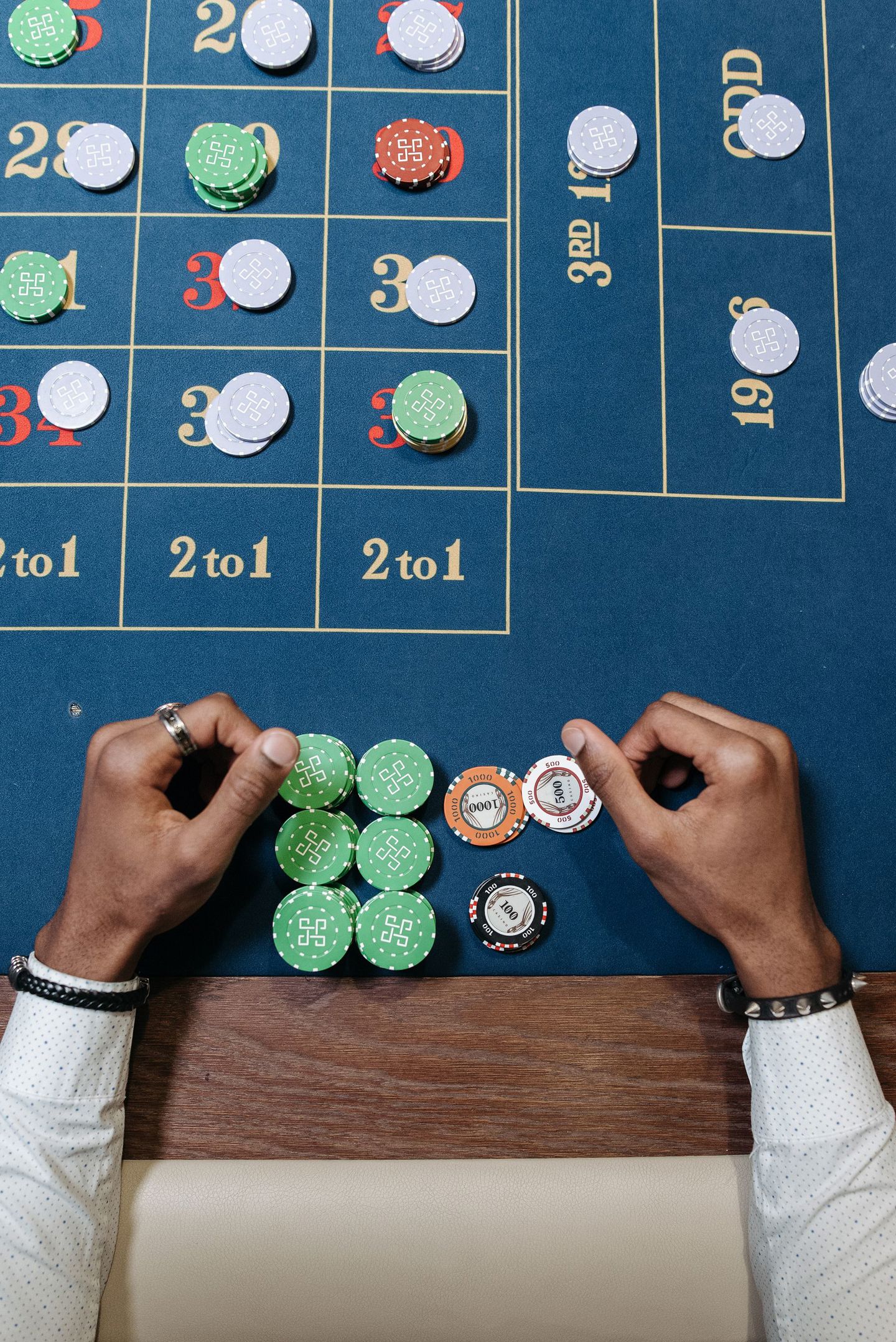
Not so long ago, if you wanted to place a bet, you’d have to get up and head to a betting shop or call your bookie. Now? You can do it in about ten seconds on your phone, maybe even less if you’ve already logged in. But as simple as that “place bet” button looks, the technology behind it isn’t simple at all.
The world of sports betting on mobile has quietly become one of the most technically demanding spaces in the app business. Every time you tap that button, a whole machinery spins up: Real-time data feeds, fraud scans, checks on where you are, split-second payments and calculations for changing odds, everything is happening in the background before your bet even goes through. The more you look at what powers this stuff, the more you realize how much consumer tech has leveled up.
The stats speak for themselves. In just the first eight months of 2025, Americans bet more than $90 billion with legal sportsbook operators, according to the American Gaming Association. That’s not just a fringe hobby; it’s become a mainstream digital routine, and mobile apps are what made it happen.
Live data is the engine room
The biggest game-changer for betting apps has been live, in-play betting. You’re not just betting before the match kicks off anymore. Now you can put money down or cash out as the game unfolds, with odds that shift by the second. This means the app has to grab data feeds instantly, run them through complex pricing algorithms and update everything on your screen in the blink of an eye. Whoever gets that data first, and gets it right, wins, because even a half-second delay can give sharp bettors an edge with outdated odds.
That’s also where mobile-first thinking really shines. Take Betway as an example, they pack sportsbooks, casino games and live in-play betting all into one app. Additionally, they design for people who are betting from their phone, not just from a desktop at home. That kind of seamless, always-ready setup is only possible because mobile infrastructure has kicked up a gear in recent years.
Keeping things fast without breaking
All that is pointless if the app crashes the moment a big game starts. Betting apps deal with wild bursts of users: Everyone logs in when the match kicks off, cashes out when it ends and chases the hot odds mid-game. The backend needs to scale with traffic instantly. That’s why the gambling industry leans so hard on cloud infrastructure and load balancers that were first designed for other sectors entirely.
People underestimate how big these spikes get. Sensor Tower’s State of Mobile 2025 report tracked how, in the legal US sports betting and daily fantasy markets, the biggest apps are pulling further ahead, most users stick to just a few platforms. That means whatever app is on top can’t afford even a single hiccup. If someone hits a glitch when they’re trying to bet live, they’ll switch to a competitor in seconds.
Geolocation and verification run the show
Here’s something most people never think about: Location checks. In countries, or even in the U.S. state by state, betting laws change every few miles. Apps have to constantly confirm where you are, not just when you sign up, but every time you try to bet. That’s a pretty tough problem to solve with only GPS, WiFi triangulation and endless background checks. And the trick is doing all that without roasting your phone’s battery.
And then there’s payments. Depositing and cashing out has to feel instant. So these apps rely on digital wallets, card tokenization and hidden fraud-detection tools to keep things moving, even though it all just looks like a slick checkout. If an operator is serving different regions, they have to build for each local payment style and every currency. So what looks simple is actually complicated engineering, customized for every market.
Personalization and interface design are catching up fast
Tech companies aren’t just obsessed with speed, they’re making the apps look and feel smarter. DraftKings rolled out augmented-reality features in 2025 that lay player stats or props over live action, pushing to make betting more immersive than just a bunch of numbers on a screen. Mordor Intelligence notes in their analysis that not everyone’s asking for fancy graphics, but it’s proof that tons of thought now goes into the betting experience, not just its mechanics.
And it’s easy to see why companies pour money into this. Yahoo Finance reported that online sports betting hit $53.78 billion globally in 2025, and expects this number to reach $93.31 billion by 2030, growing at around 11.65% a year. It’s not that more people suddenly love sports, it’s that the technology makes it easier and better to play.

A live online casino creates a more formal setting than a standard digital game. Real dealers, scheduled tables and visible player interaction bring a clear sense of occasion. The challenge is knowing how to join that setting without appearing careless or disrupting the table. A simple code covers presentation, communication and timing. It helps the game run smoothly and gives each session the polished atmosphere that makes live play distinctive.
A Familiar Code for a Digital Setting
People who use sports betting online already understand the value of timing and clear rules. Live casino tables available at Betway casino apply the same basic principle in a more social setting. Players join a shared game where the dealer controls the pace and every decision follows a set order.
The code is rarely presented as a strict rulebook. Most of it comes from common courtesy. Players should understand the game before joining, place bets within the stated period and avoid distracting messages. A professional operator also supports this atmosphere with clear table limits and reliable streaming.
The setting feels organised because everyone knows their role. The dealer manages the cards or wheel. The platform handles bets and results. Players make decisions within the available time. When those roles remain clear, the table has the rhythm of a well-run physical venue.
Does a Dress Code Apply Online?
Most platforms do not require players to dress formally. The dealer, however, is usually presented in smart clothing that fits the table theme. A blackjack host may wear a suit or evening dress, while a game-show presenter may have a brighter style.
Players are generally not visible to the dealer or other participants. That makes the dress code symbolic rather than compulsory. Still, some users choose smart-casual clothing because it helps create a more focused mood. The same idea applies when watching a major match or placing sports betting online from home. Personal surroundings can influence how seriously someone treats the activity.
A useful personal dress code might include:
- Comfortable clothing that still feels presentable
- A quiet, organised space with limited distractions
- Headphones when sound could disturb other people
- A device positioned securely at eye level
These details have no effect on the result. They can, however, make the session feel more deliberate and composed.
Good Behaviour Keeps the Table Moving
Live casino etiquette matters most in the chat box. Messages should remain relevant and respectful. A brief greeting or a polite comment can add warmth to the table. Repeated complaints, excessive capital letters or attempts to distract the dealer weaken the experience for everyone.
Dealers may manage several tasks at once. They announce results, monitor the betting window and answer suitable questions. Players should allow them to complete each stage before requesting clarification. A short delay is often part of the broadcast process rather than a mistake.
Strong table conduct includes:
- Reading the game rules before making the first wager
- Keeping chat messages brief and appropriate
- Respecting the dealer’s instructions and table schedule
- Checking the connection before joining a fast game
It is also good practice to avoid discussing personal account matters in public chat. Payment questions or technical issues belong with customer support.
Why Music Matters More Than It Seems
Background music helps define the pace of a live table. Soft jazz may suit a classic baccarat room, while upbeat electronic music can support a game-show format. The soundtrack fills quiet moments between rounds and reduces the mechanical feel of repeated betting windows.
Music can also influence a player’s sense of speed. A fast track may make a session feel more active, while calm music can support a measured approach. Players who prefer their own soundtrack have many options. Apple Music offers a broad catalogue and subscribers can download songs, albums or playlists for offline listening. That offline option is useful when someone wants uninterrupted music without relying on a second live stream.
Volume still matters. Music should sit below the dealer’s voice. Important announcements, betting deadlines and game instructions need to remain clear.
Scale Has Raised Expectations
Live casino presentation continues to improve as the sector grows. The UK Gambling Commission reported that remote casino gross gambling yield reached £1.5 billion between October and December 2025, supporting continued investment in quality.
Players expect sharp video, clear sound and skilled presenters. The standard is similar to sports betting online, where reliable updates and a smooth interface build trust.
This attention to detail makes live casino tables feel different from automated games. Human presentation introduces small variations in tone and pacing. The dealer may welcome a new participant, explain a rule or react naturally to an unusual sequence. Those moments give the table character while the formal game structure stays intact.
What Makes the Live Format Special
The appeal of a live online casino comes from controlled social interaction. Players can take part from home while still seeing a real table and a professionally managed game. The experience has ceremony without requiring travel or formal entry.
Its code is straightforward. Arrive prepared, follow the table pace and communicate with respect. Personal style remains flexible, but thoughtful presentation can improve focus. Music adds atmosphere when it supports rather than competes with the game.
A strong live table feels calm and well organised. The technology stays in the background, while the dealer and the game take centre stage. That balance is what gives the format its distinctive character.

Online gambling habits continue to change in 2026, with more players exploring international platforms that operate outside the UK market. One of the main trends is the growing interest in casinos not on GamStop, which offer an alternative to gambling sites licensed by the UK Gambling Commission.
These casinos are not connected to the national GAMSTOP self-exclusion database. They are usually licensed in other jurisdictions and may follow different rules regarding registration, bonuses, deposits and account limits.
A major reason for their popularity is the range of promotions available. International casinos often provide larger welcome bonuses, free spins, cashback offers and loyalty rewards. Some operators also run regular tournaments and VIP programmes for existing players.
Game selection is another important factor. Many platforms feature thousands of slots, live casino tables, crash games and traditional titles such as roulette, blackjack and baccarat. Some sites also include sports betting and esports, allowing players to use one account for several types of gambling.
Flexible banking options have also contributed to their appeal. Depending on the operator, players may be able to deposit using cards, bank transfers, e-wallets or cryptocurrencies such as Bitcoin, Ethereum and USDT. Crypto payments can sometimes be processed more quickly, although withdrawal times still depend on the casino’s internal checks.
Players may also find fewer restrictions around deposits, bonuses and gameplay. However, this additional freedom comes with greater responsibility. Protection standards can vary between licensing jurisdictions, and not every international casino provides the same level of customer support or dispute resolution.
Before creating an account, players should check the casino’s licence, reputation, withdrawal conditions and bonus terms. It is also worth reviewing the available responsible gambling tools, including deposit limits, cooling-off periods and account closure options.
Casinos outside GamStop can offer more choice and flexibility, but they are not suitable for players who are trying to maintain a self-exclusion. Gambling should always be treated as entertainment, with clear spending and time limits in place.

How Traffic Safety Cones Enhance Visibility and Hazard Awareness

Comparing Metro Silver Markets and What Drives Their Daily Rates

How LGBTQ+ Youth Programs Encourage Connection and Confidence

How Professional Services Protect Your House Year-Round

How online betting apps got so good with high-tech running under the hood
How Professional Services Protect Your House Year-Round
How LGBTQ+ Youth Programs Encourage Connection and Confidence
How online betting apps got so good with high-tech running under the hood
Comparing Metro Silver Markets and What Drives Their Daily Rates