
News
In what ways may a QA team assist in the UAT process?


User acceptability testing (UAT) is the most important stage in the software development life cycle. UAT testing guarantees that the new system or UAT defect management procedure fulfills user specifications. It is vital that the application passes user acceptance testing since this is the last quality gate that evaluates product quality, correctness, and compliance before its release into production.
A good UAT is essential for delivering error-free and risk-free systems. However, applying UAT in an agile context may result in shorter and more frequent testing cycles. This requires the testers to acquire proficiency in optimum testing procedures, automation, and coordination with the development and quality assurance teams.
QA Teams’ Function in UAT Testing
Generally, User Acceptance Testing is a “black box” testing. In other words, the functionality and usefulness of the program take precedence over its technological components. User Acceptance Testing is the last Quality Assurance activity before the application’s deployment. It is conducted in a setting that closely matches the production environment or the actual world.
In most businesses, business users do user acceptability testing. It depicts a cross-section of people in order to test the new application using realistic circumstances. As this is a key software quality check, great attention must be taken to develop a suitable UAT testing environment and methodology.
Every firm strives to provide the highest quality goods and services. The Quality Assurance (QA) function comes into play to guarantee that the product is of the highest quality and fulfills client criteria. Through the deployment of quality assurance, review processes are structured and the best testing procedures are used to determine a product’s quality.
QA is a critical activity that enables businesses to create superior products. Look for a QA staffing agency looking to take advantage of User Acceptance Testing (UAT) capabilities. This software testing approach is conducted to get meaningful input from product owners and consumers, and to guarantee the functionality, scalability, quality, and security of a specific product (or) service area in accordance with customer expectations.
Why do firms want to use QA and spend time and money on UAT?
Before examining the function of QA teams in UAT testing, let’s examine the specific contributions that QA teams and UAT provide to a company.
Importance of QA teams: When a business embraces the QA function as a strategic move, particular tools, procedures, resources, and controls are integrated to enhance their efficacy. This integration enables a comprehensive assessment of a product or system, which aids in identifying flaws, design and function concerns.
The QA team creates comprehensive documentation on the exact tools, techniques, structure, and best practices for generating a high-quality product. The QA manager monitors the development of the product and uses testing techniques to resolve any functionality concerns.
The importance of UAT
The UAT approach determines precisely what the client expects from the product by soliciting their opinion. Customers serve as a feedback support group by providing their input to enhance the product’s functionality and user experience. UAT is often the last step of software testing, during which the product owner or customers test the completed product in real time and offer feedback to the teams. The teams then consider their own input and respond appropriately.
The function of QA teams in UAT
- UAT focuses on generating the highest-quality product possible by incorporating frequent customer input. QA teams must ensure that testing procedures are conducted strategically to not only increase the product’s quality and usability but also make it more user-friendly.
- QA teams simplify the testing process so that the result of UAT is significantly improved, consequently maximizing the UAT implementation process.
- Through inspections and process checklists, QA teams attempt to iteratively improve the quality and efficiency of a product’s functionalities. Through this ongoing effort, UAT may enhance its testing procedures and contribute to the creation of a high-quality product.
In the context of quality efforts as a whole, UAT service is an integral component of any Quality Assurance program. It is recommended to assign this sort of testing procedure to an experienced QA team in order to get the best results.

Owning a home involves managing complex mechanical systems and structural components that require routine professional attention. Proactive household care keeps major equipment working efficiently.
Understanding what each specialty service provides allows homeowners to make informed decisions about property care. These essential professional services maintain overall safety and long-term property value over time.
Roof Inspection and Maintenance
Roofs endure constant exposure to harsh weather conditions and require periodic professional evaluations to detect minor damage before leaks form. Homeowners can contract independent roofing companies or licensed building inspection firms for these detailed evaluations. A certified roofing professional checks shingles, flashing, gutters, and ventilation gaps to confirm structural integrity across the entire exterior.
Regular professional monitoring protects interior ceilings and wall framing from water contamination while preserving the overall lifespan of the building material.
Plumbing Systems Care
Plumbing systems handle water delivery and waste removal throughout the entire residence, making proactive professional checks vital for daily health and sanitary conditions. Licensed plumbing contractors and full-service residential mechanical companies offer comprehensive assessments for home water lines.
During a service appointment, technicians inspect hidden supply lines, drainage pipes, fixtures, and water heaters to locate hidden leaks or mineral buildup. Identifying minor line blockages or worn pressure valves prevents pipe bursts and costly interior water damage.
Electrical Safety Audits
Overloaded electrical panels and degraded wiring create significant fire risks that routine electrical inspections easily identify. Licensed master electricians and regional electrical contracting agencies perform these comprehensive safety audits for residential properties. The visiting electrician tests main circuit breakers, outlet grounding, wall switches, and electrical panels to confirm complete compliance with modern safety codes.
Scheduled electrical evaluations verify that modern appliances receive steady power without stressing existing internal wiring circuits.
Gutter and Downspout Maintenance
Clogged rain gutters cause rainwater to overflow and accumulate around the home foundation, leading to serious structural soil erosion.
Property owners can hire specialized gutter cleaning services or professional exterior maintenance crews to manage these tasks safely. A trained service worker clears out organic debris, checks attachment brackets, aligns downspout extensions, and flushes drainage lines. Keeping runoff moving freely away from exterior walls stops wood rot and keeps basement walls dry during heavy rainstorms.
Heating and Air Conditioning Servicing
Heating and cooling systems work continuously to regulate interior temperatures and filter ambient air throughout every season.
Homeowners secure these crucial tune-ups through certified HVAC contracting companies, such as Airco, or licensed climate control technicians. A technician inspects blower motors, cleans condenser coils, tests electrical connections, and verifies correct refrigerant levels during a standard service visit.
Routine HVAC maintenance keeps utility consumption manageable while avoiding sudden mechanical breakdowns during extreme temperature periods.
Chimney and Fireplace Care
Creosote accumulation inside active chimneys presents a severe fire hazard that requires specialized annual removal. Certified chimney sweeps and licensed masonry restoration contractors provide thorough chimney cleaning and structural safety inspections.
The specialist examines flue liners, damper mechanisms, chimney caps, and exterior brickwork to confirm proper ventilation and safety. Clearing blocked flues prevents carbon monoxide accumulation inside living quarters and preserves safe fireplace operation during winter months.
Termite and Pest Control
Unchecked pest infestations cause significant damage to wooden structural supports and create unhygienic conditions inside living spaces. Licensed pest management firms and regional extermination companies offer scheduled pest monitoring along with targeted treatments. An exterminator searches foundation walls, attic rafters, crawlspaces, and exterior perimeter soil to detect signs of unwanted wood-destroying insects.
Continuous pest management safeguards structural framing and keeps living areas clean and comfortable for all occupants.
Foundation and Structural Monitoring
Shifting soil and water pressure cause foundation walls to crack, creating long-term structural instability across the entire building.
Property owners can hire independent structural engineering firms or certified foundation repair specialists to evaluate structural settlement. A qualified structural specialist measures wall movement, checks floor levelness, examines load-bearing supports, and assesses exterior drainage patterns. Professional evaluations allow homeowners to address minor masonry cracks before extensive structural repairs become necessary.
Lawn Care and Exterior Landscaping
Overgrown trees and dense vegetation damage home siding, block sunlight, clog roof gutters, and drop heavy limbs during severe storms.
Homeowners hire licensed tree care companies or professional landscaping providers to maintain exterior foliage properly. An arborist prunes dead branches, trims encroaching tree canopies, manages ground cover, and inspects root systems near underground utility lines.
Professional landscape management protects exterior building finishes and keeps trees growing safely away from overhead power structures.
Window and Exterior Sealant Care
Failing caulk and worn weather-stripping allow moisture and drafts to breach window frames, lowering home energy efficiency over time.
Homeowners can hire professional window restoration services or residential weatherization contractors to update deteriorating exterior seals. A technician inspects glass seals, replaces hardened caulking, installs fresh weather-stripping, and checks window sash alignment. Maintaining tight seals prevents wood rot around window frames while stabilizing indoor climate control performance.
Septic and Sewer Line Maintenance
Underground waste lines carry household effluent away from the living area, making regular inspections vital for avoiding sewage backups.
Property owners contract licensed septic pumping companies or municipal sewer service specialists to manage these underground systems. A waste management technician inspects tank fluid levels, checks baffle tees, cleans effluent filters, and monitors pipe flow using video cameras.
Scheduled waste line maintenance prevents hazardous soil contamination and extends the operational life of underground piping networks.
Systematic household maintenance requires partnering with reliable, qualified professionals across many trades. Scheduling routine inspections throughout the year keeps major home equipment running smoothly and prevents sudden costly repairs.
Working with certified experts protects property integrity and offers reassurance for homeowners. Staying informed about each mechanical system allows property owners to manage household needs with confidence.

There is a cost in trading that never shows up on any fee schedule. No exchange advertises it, no calculator adds it up for you, and most traders never even give it a name. I certainly didn’t for the first few years. I called it “bad luck” instead.
It took me an embarrassingly long time to understand that the money quietly leaking out of my account had almost nothing to do with commissions.
When the Chart Is Right but the Fill Is Wrong
Let me describe a moment every active trader will recognize. You spot a clean setup. Price is coiling exactly where you expected. You commit, you click, and the market does precisely what you predicted it would do.
And yet, when you close the position, the profit is thinner than the chart promised.
For a long time I blamed my entries, my timing, my nerves. Then I started logging the gap between the price I intended to trade at and the price I actually received. Over hundreds of orders, that gap added up to a number far larger than everything I had ever paid in fees combined.
That number has a name. It is called slippage, and it is the real tax on active trading.
Why I Started Judging Platforms Differently
Once I understood where the leak was coming from, my priorities flipped completely. I stopped asking “which exchange is cheapest?” and started asking “which exchange actually gives me the price I see?”
That single change in perspective is what eventually brought me to ScalpBase.
I did not arrive there because of a flashy promotion or an influencer thread. I arrived there because I was running a very unglamorous experiment: placing identical orders across several platforms and measuring how faithfully each one turned my intention into an executed trade.
What the Comparison Actually Showed
Nothing dramatic — just BTC/USDT, candles, moving averages, volume. But behind that calm interface, the thing I was measuring was how the platform behaved in the half-second between my decision and my fill.
ScalpBase held up better than I expected. Order matching stayed tight even when the market got jumpy, the price ladder updated without stutter, and — most importantly — the distance between “the price I saw” and “the price I got” stayed small and predictable.
Predictable is the word that matters. A platform doesn’t have to be magic. It just has to be honest about what it can deliver, over and over, so you can plan around it.
Speed Is Not a Bragging Right, It Is Protection
Traders love to talk about speed as if it were a horsepower number to show off. In reality, speed on an exchange is defensive, not offensive. It protects the price you already decided was fair.
When volatility spikes and everyone rushes for the same exits at once, a sluggish platform turns your careful plan into a guess. A responsive one lets your original decision survive contact with a chaotic market.
That is the quiet value I found here. Not thrills — reliability under pressure.
The Things I Stopped Worrying About
After a few weeks, I noticed something subtle. I was spending less mental energy on the tool and more on the actual trade. I wasn’t refreshing to see whether an order had really gone through. I wasn’t second-guessing whether a cancel had registered.
The features that made this possible are unglamorous by design:
- fills that match the price I aimed for
- an order panel that responds instantly, not eventually
- market data that stays accurate when it counts most
- position controls that don’t bury me in menus
None of that will ever headline a marketing campaign. All of it is what actually keeps a trading account from bleeding.
What I’d Tell My Earlier Self
If I could send one message back to the version of me who spent years optimizing strategy while ignoring execution, it would be short: the cheapest exchange on paper is often the most expensive one in practice.
ScalpBase didn’t win me over by promising returns or dazzling me with products I’d never use. It won me over by doing the boring thing consistently — turning my decisions into fills without quietly skimming off the top.
For a trader, that boring consistency is worth more than any bonus. It is the difference between a strategy that works on a chart and one that works in your account.
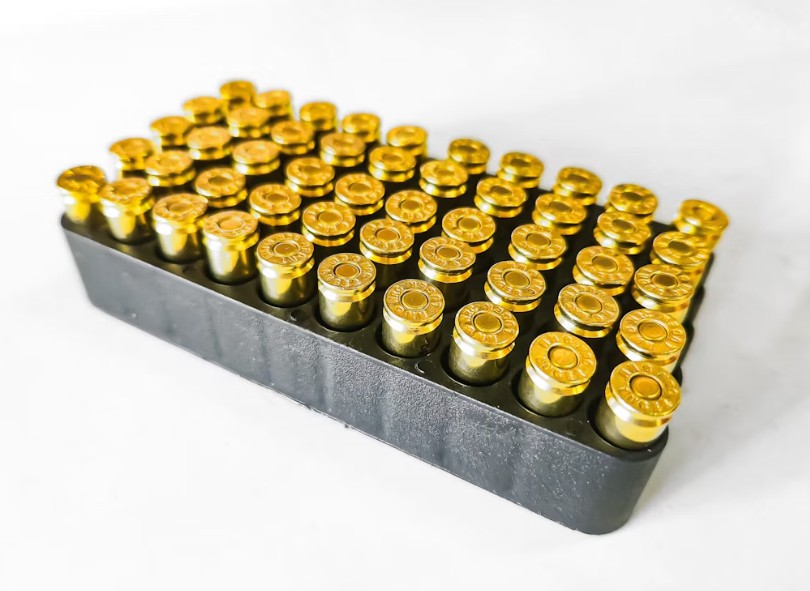
Reloading 9mm ammunition requires attention to every component, and brass is no exception. While brass cases are often reused several times, their condition can gradually affect how consistently ammunition performs. Choosing premium 9mm brass can provide reloaders with more uniform cases, dependable dimensions, greater confidence, and more consistent results during the loading process.
For recreational shooters, competitors, experienced reloaders, and serious shooting enthusiasts alike, consistent components can make a meaningful difference. Understanding why brass quality matters can help you make better decisions when preparing 9mm ammunition.
Improve Case-to-Case Consistency
Premium 9mm brass is typically selected and processed with consistency in mind. Cases with more uniform dimensions can help create a more predictable foundation for the reloading process. When cases vary significantly in length or overall dimensions, the resulting ammunition may be less uniform.
Consistent brass can make case preparation more straightforward because reloaders are working with cases that have similar characteristics. This can support more repeatable sizing, priming, bullet seating, and overall cartridge assembly from one round to the next.
Support Reliable Reloading Processes
The condition of the brass case directly affects several stages of reloading. Cases that show excessive wear, visible damage, dimensional inconsistencies, or other defects may require additional inspection or processing before they are suitable for reuse.
Premium 9mm brass, like those offered at Precision Brass, can reduce some of these concerns by providing cases that are selected for quality and usability. Clean, properly inspected brass can move more smoothly through the reloading workflow, allowing reloaders to focus on maintaining consistent procedures rather than dealing with questionable cases.
This is particularly valuable for high-volume reloading, where small variations can become more noticeable across a larger batch of ammunition.
Maintain Consistent Case Dimensions
Case dimensions play an important role in ammunition reliability. The brass must interact properly with the firearm’s chamber and the other components used during loading. Variations in case dimensions can affect how ammunition feeds, chambers, performs, and cycles through a firearm.
Premium brass is often valued for its dimensional uniformity. Consistent cases provide a more predictable starting point for resizing and other preparation steps. For reloaders who prioritize repeatability, having brass with consistent characteristics can make it easier to maintain a controlled loading process.
As with any reloading component, cases should still be inspected before use and loaded based on reliable published data and established safety practices.
Promote Repeatable Reloading Results
One of the main benefits of quality brass is repeatability. When cases have similar characteristics, reloaders can develop more consistent loading routines. This can be especially important when producing ammunition for practice or competition, where maintaining similar performance across a batch is desirable.
Brass is only one part of the equation. Powder selection, primers, bullets, sizing procedures, and loading practices all contribute to the final result. However, starting with consistent cases removes one potential source of unnecessary variation. Over multiple loading sessions, this consistency can also make it easier to identify other factors that may be affecting ammunition performance.
Extend Brass Usability Through Proper Care
Quality brass can be a worthwhile investment when it is properly maintained. Reloaders should inspect cases regularly for signs of damage, excessive wear, or other conditions that could make them unsuitable for continued use. Proper cleaning, sizing, storage, and handling can help preserve usable brass between loading sessions.
Premium 9mm brass does not eliminate the need for inspection. Instead, it gives reloaders a reliable component from which to build a careful and repeatable process.
Consistent 9mm reloading starts with dependable components. Premium 9mm brass can provide greater uniformity in case condition and dimensions, helping support a more predictable reloading workflow. While brass alone cannot guarantee identical ammunition performance, quality cases can lessen unnecessary variation and make consistent results easier to pursue.
For reloaders who value reliability and repeatability, investing in premium brass can be an important part of a disciplined loading process. When combined with careful case inspection and reputable loading data, quality 9mm brass can help create a more consistent foundation for every reloading session.

Cazino și divertisment digital: rolul limitelor și al transparenței

How Traffic Safety Cones Enhance Visibility and Hazard Awareness

Comparing Metro Silver Markets and What Drives Their Daily Rates

How LGBTQ+ Youth Programs Encourage Connection and Confidence